
Gum disease is often thought of as a problem that only affects the gums, but its effects can go much deeper. As periodontal disease progresses, it can damage the tissues and bone that support the teeth. Without treatment, this damage may eventually lead to loose teeth, changes in your bite, and even tooth loss.
The good news is that gum disease often develops gradually, giving patients an opportunity to intervene before severe damage occurs. Understanding how periodontal disease affects the supporting structures of the mouth can help explain why early treatment and ongoing maintenance are so important.
For patients seeking periodontal care in Tucson, recognizing the relationship between gum disease, bone loss, and tooth stability is an important part of protecting long-term oral health.
Gum Disease Begins With Bacterial Buildup
Gum disease typically begins when plaque accumulates around the teeth and along the gumline. Plaque contains bacteria that can irritate the gums and trigger inflammation. In the early stage, known as gingivitis, the gums may become red, swollen, tender, or prone to bleeding.
At this point, the inflammation is generally limited to the gum tissue, and the bone supporting the teeth has not yet been permanently damaged. With professional cleaning and improved oral hygiene, gingivitis can often be reversed.
If the condition is allowed to progress, however, the infection can move deeper below the gumline.
How Periodontitis Damages the Supporting Tissues
When gingivitis develops into periodontitis, the infection begins affecting the structures that hold the teeth in place.
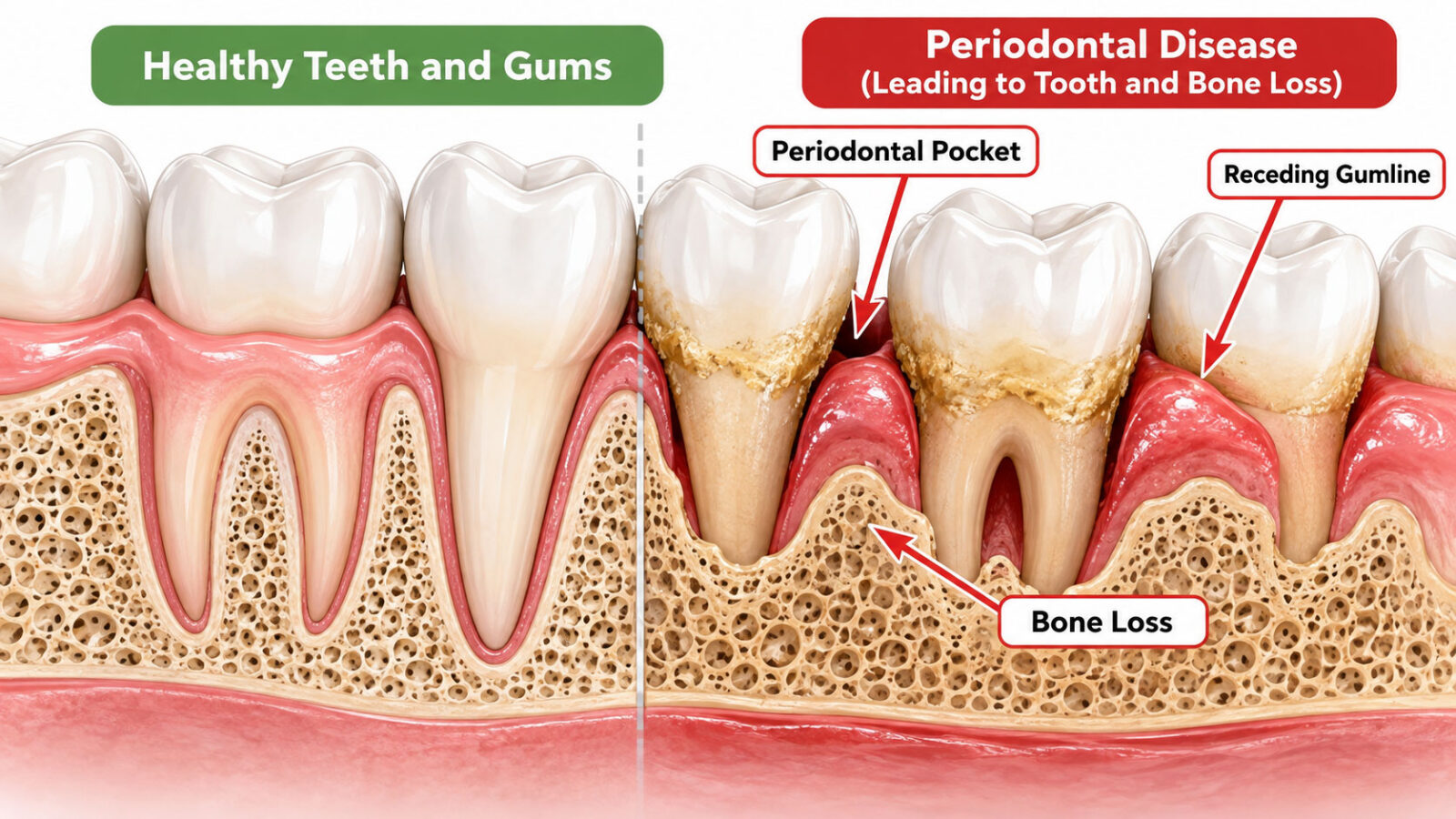
Healthy gums normally fit snugly around the teeth. With periodontal disease, the gums can begin to pull away, creating spaces called periodontal pockets.
These pockets can trap plaque, tartar, and bacteria in areas that are difficult to reach with a toothbrush or floss.
As bacteria continue to accumulate beneath the gumline, the body’s immune system responds with ongoing inflammation. Over time, this inflammatory process can contribute to the breakdown of the connective tissues and bone that support the teeth.
This is where gum disease becomes much more serious.
Why Bone Loss Matters
Your teeth depend on the surrounding jawbone for stability. At first, the changes may not be obvious. But when the roots of the teeth are anchored in bone, it helps keep them firmly in place while you chew and bite. When periodontal disease causes this bone to deteriorate, the teeth gradually lose some of their support.
As bone loss progresses, however, teeth may begin to feel loose or shift position. You may notice new spaces between teeth, changes in the way your bite feels, or increased sensitivity.
In advanced cases, there may not be enough healthy bone remaining to support the teeth properly. This is one of the primary reasons untreated periodontal disease can eventually lead to tooth loss.
Gum Recession Can Make the Problem More Visible
As periodontal disease progresses, gum tissue may recede, exposing more of the tooth surface or the roots. This can make the teeth appear longer and may contribute to sensitivity, especially when eating or drinking hot, cold, or sweet foods.
Gum recession can have several causes, including aggressive brushing and genetics, but when it occurs alongside deeper periodontal pockets and bone loss, it may be a sign of more advanced periodontal disease.
A specialist like Southern Arizona Periodontics can evaluate both the gum tissue and the underlying bone to determine the extent of the problem.
Bone Loss Can Occur Without Severe Pain
One of the challenges with periodontal disease is that significant damage can occur without causing severe pain. Some patients may experience bleeding, tenderness, or bad breath, while others may notice very few symptoms. Because bone loss itself is not always painful, patients may not realize how much periodontal damage has occurred until a dental examination or X-ray reveals it.
This is why routine periodontal screenings are so important.
Dental professionals can measure the depth of the spaces around the teeth and evaluate bone levels to identify problems before they become more severe.
How Periodontal Treatment Helps Protect Bone
Once periodontal disease begins damaging the bone, treatment focuses on controlling the infection and preventing additional destruction.
Scaling and root planing may be used to remove plaque and tartar from beneath the gumline and smooth the root surfaces of the teeth.
This can help reduce bacteria and inflammation, allowing the gums to heal more closely around the teeth.
For more advanced cases, periodontal surgery may be necessary to access deeper areas that cannot be cleaned effectively with non-surgical treatment alone.
By reducing bacterial buildup and inflammation, periodontal treatment can help slow or stop further bone loss.
The goal is to preserve as much of the natural supporting structure as possible.
Can Lost Bone Be Rebuilt?
In certain situations, some of the bone lost to periodontal disease may be treated with regenerative procedures.
Bone grafting is one option that may be used to help rebuild bone in specific areas around the teeth. Periodontists may also use regenerative materials designed to encourage the body to restore damaged tissues.
However, not every area of bone loss can be completely regenerated.
The success of regenerative treatment depends on several factors, including the location and shape of the bone defect, the severity of the disease, the patient’s overall health, and how well the infection is controlled.
Even when full regeneration is not possible, treatment can still be valuable for stabilizing the condition and protecting the bone that remains.
What Happens If a Tooth Cannot Be Saved?
In some advanced cases, periodontal disease may destroy so much supporting tissue and bone that a tooth can no longer be preserved.
If a tooth must be removed, the periodontist will evaluate the surrounding bone and gums to determine the best approach for replacing it. Dental implants may be an option for some patients, but successful implant treatment depends on having healthy gum tissue and adequate bone support.
If significant bone loss has occurred, a bone graft may sometimes be recommended before or during implant treatment. This is another reason treating periodontal disease early can be beneficial. Preserving natural bone can make future treatment options simpler and more predictable.
Ongoing Maintenance Is Essential
Even after the active infection has been treated, patients who have experienced periodontitis remain at increased risk for future problems. Regular periodontal maintenance visits allow dental professionals to remove bacterial deposits, monitor gum health, measure periodontal pockets, and watch for changes in bone support.
Daily brushing and cleaning between the teeth are also critical.
Together, professional care and consistent home hygiene can help protect the gums, teeth, and supporting bone over the long term.
Protecting Your Teeth Starts With Healthy Gums
The health of your teeth depends heavily on the tissues and bone that surround them.
When gum disease is allowed to progress, it can gradually weaken those supporting structures and increase the risk of tooth loss. Fortunately, periodontal disease can often be controlled with appropriate treatment and ongoing maintenance.
If you are experiencing bleeding gums, gum recession, loose teeth, persistent bad breath, or other signs of periodontal disease, a periodontal evaluation can help determine whether bone loss is occurring.
For patients looking for a periodontist in Tucson, early diagnosis and treatment can play an important role in preserving natural teeth, protecting jawbone, and maintaining long-term oral health. If you feel that you want to talk to a specialist about your gum health, we invite you to contact us today to schedule a consultation. Even if it’s simply a second opinion from an existing dentist or periodontist, we’re here to help give you the best information possible.